



What Is PDR and When It Works
PDR Methods: Types of Paintless Dent Repair

FSDAVCFEBFEVSDDVFSD
FSDAVCFEBFEVSDDVFSD

FSDAVCFEBFEVSDDVFSD
What Is PDR and When It Works
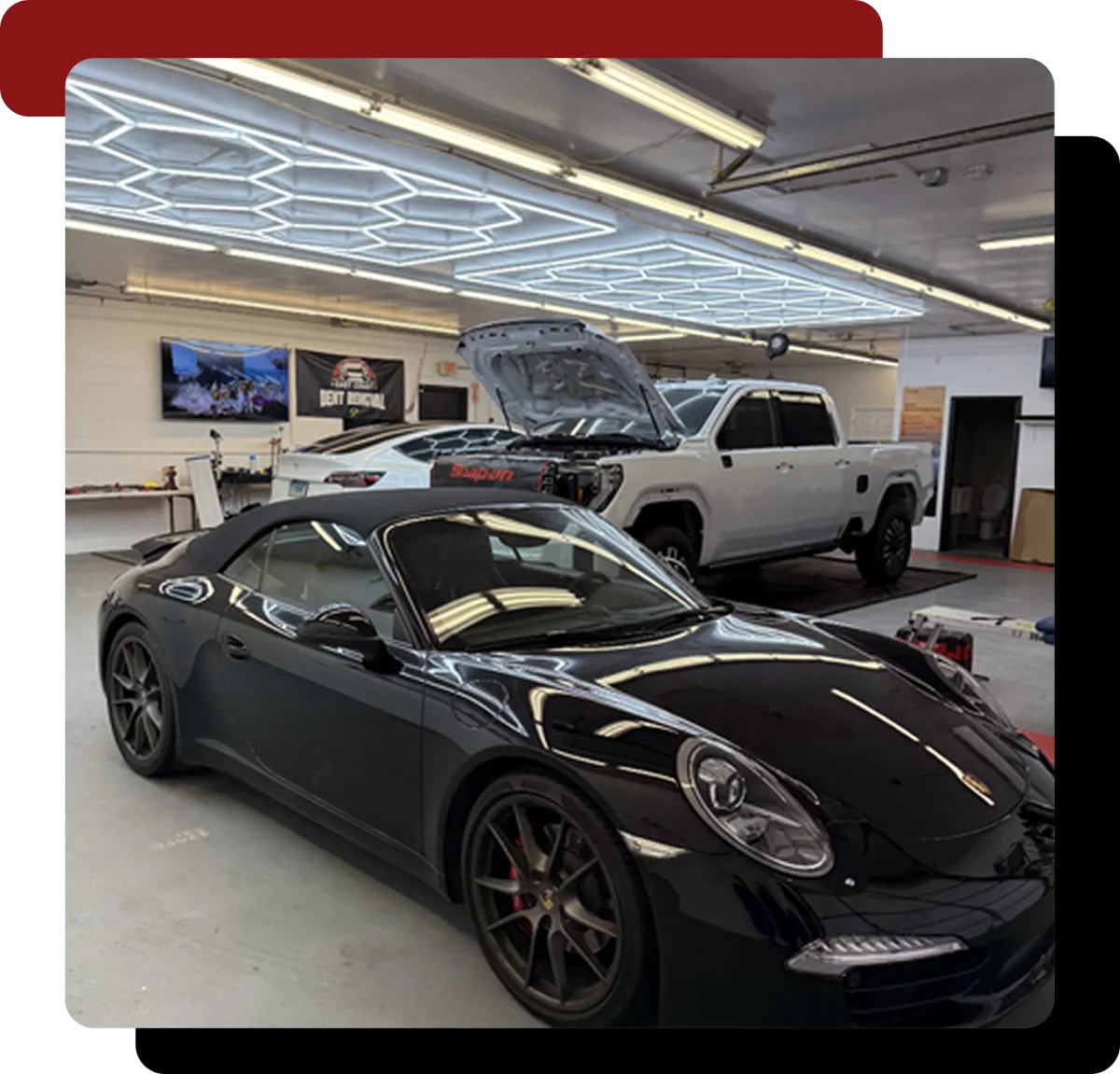
People often ask, “what is pdr” when they see a small dent and want a quick fix. PDR stands for paintless dent repair, a method that reshapes metal from behind the panel so the factory paint stays. Instead of sanding, filler, and repainting, a tech uses light reflections and controlled pressure to return the surface to its original shape.
People also search “what is paintless dent repair” because they want paintless dent repair for vehicles that still look new. Paintless Dent Repair is best for door dings, parking taps, and dents where the paint is not cracked. Rounded dents with mild stretching respond well, while sharp creases, torn metal, or broken paint may need other work. An inspection checks depth, access, and whether you can repair small dents without repainting.
Core Paintless Dent Repair Methods Explained
Most paintless dent repair methods start with reading the metal, not guessing. A PDR light or reflection board shows every low and high spot. With that map, a tech chooses the right pdr tools and techniques, like fine-tip rods, whale tails, and knockdowns to blend texture.
One common set of paintless dent repair techniques is pushing from behind the panel. Tiny pushes raise the low area, then tap-down work levels any highs. Another approach is glue pulling dent repair, where tabs pull the dent outward when backside access is blocked, followed by careful blending so the paint surface stays smooth.
These methods can handle more than door dings. Hail dents, shallow fender dents, and many body line dent repair cases can be corrected without repainting when the finish is intact. For crease dent repair pdr, the deepest point is raised first, then the edges are softened until reflections look even. When metal is stretched or paint is cracked, a shop may suggest push to paint pdr, which reduces filler and keeps the repair smaller overall.
Push Techniques for Body Line Dents
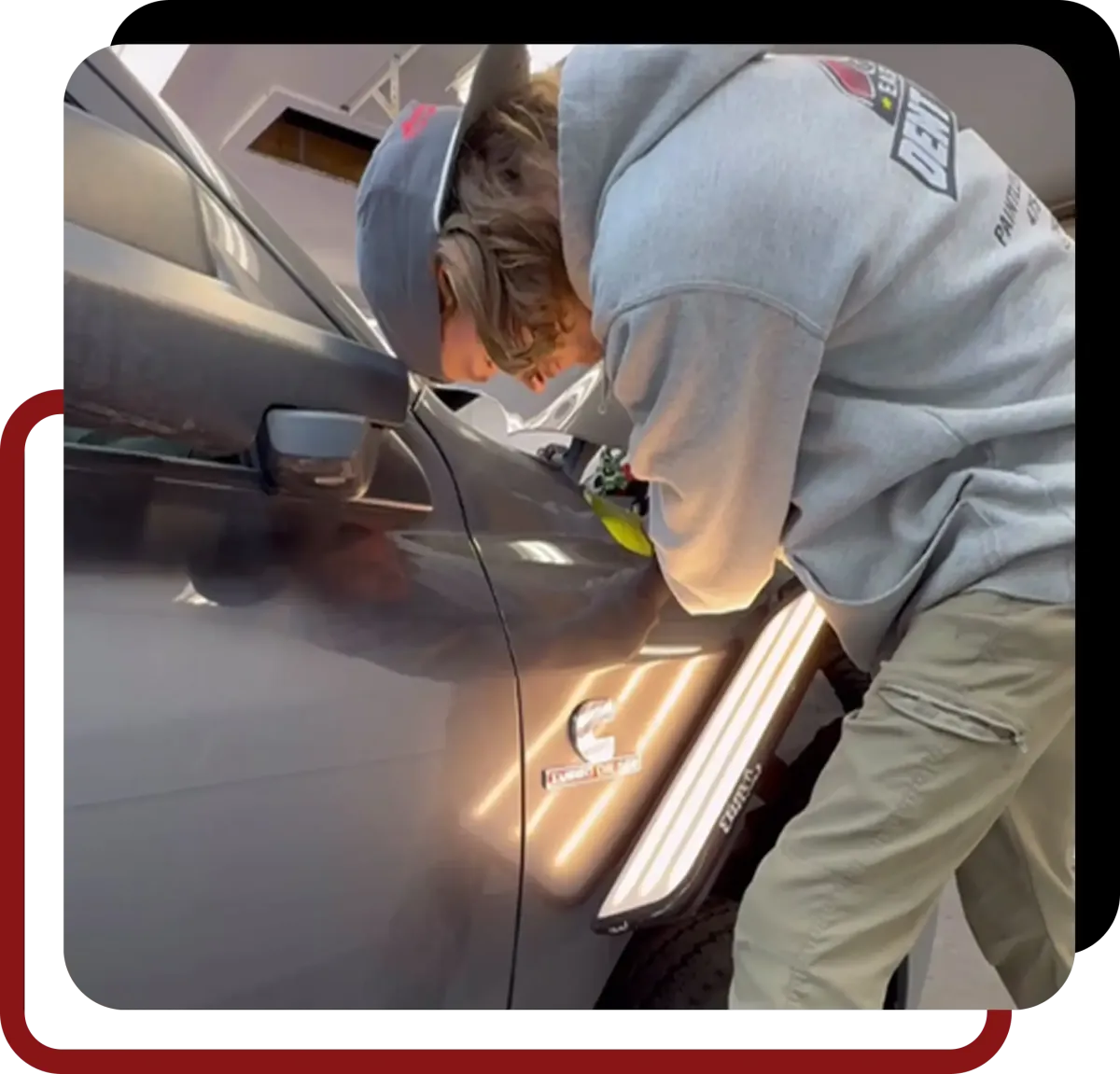
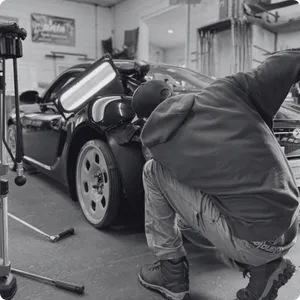
Push work is the classic approach in PDR. The tech reaches the backside of the dent through factory openings, then uses rods to apply pressure in tiny steps. Good access matters, so door panels, liners, or lights may be loosened. This is how paintless dent repair works on many panels without changing the original finish.
Body line dent repair takes more patience because the curve must match, not just the center. A tech will lift the lowest point, then walk the tool along the line to restore the ridge. For crease dent repair pdr, pushes are smaller and closer together. Knockdowns tap highs flat so ripples don’t show in sunlight.
Door ding repair methods often finish with blending, not pushing. After the dent is nearly level, the tech matches the factory orange-peel texture by tapping and checking reflections. This step is why results look natural from different angles. If a dent sits near a brace and tools can’t reach, glue pulling may be mixed in with push work as needed.
Before any repair, the tech checks the paint for cracks, chips, or prior body work. PDR works best when the finish can flex. If you want professional dent removal, take photos in bright shade and note where the dent sits on the panel. Dents on edges, near hinges, or on tight body lines may take longer. Still, many door dings and minor dents can be corrected in one visit with the right tools for everyone.
A good dent repair service will explain limits before starting. If the paint is cracked, or the metal is stretched, paintless dent repair for vehicles may not reach a finish. Some shops still use PDR to reduce damage before paint, cutting filler and sanding. Ask how they plan to access the dent and what steps they will use to blend the surface. Clear answers help you compare dent repair shops and choose the right option before work begins.
Glue Pulling Dent Repair Basics
Glue pulling dent repair is used when you can’t reach the backside of a dent. A tech cleans the panel, warms the area, and attaches a plastic tab with hot glue. After the glue sets, a pulling tool lifts the low spot outward. The tab is removed, and the surface is tapped down to blend metal carefully afterward.
Because the tool pulls on the paint surface, glue work requires the right conditions. Factory paint usually holds well, but weak repaint can lift. Techs use quick-release alcohol and keep pulls small to protect the finish. Good pdr tools and techniques matter here: different tabs, pullers, and tap-down tips shape the dent without leaving high sharp edges behind.
Glue pulling is common for door ding repair methods on double-walled areas, like some edges and reinforcement zones. It can also start a wide hail dent before fine pushing. After each pull, the tech blends with tiny taps and checks reflections. This back-and-forth is part of how paintless dent repair works, and it’s why patience matters more than force.
Push to Paint PDR for Realistic Limits
Push to paint PDR is used when the dent can’t be finished fully paintless. The tech pushes the metal close to its original shape, so a body shop uses less filler. This keeps repairs smaller and can reduce sanding and blend area on the panel.
It’s common on sharp creases, heavy body line hits, and dents with light paint stress. The goal is still a solid metal shape, but not a perfect finish. A good tech will show what remains and explain next steps before you commit to later paint work.
Even with a push to paint, the PDR step can save time and money. Less filler means less shrink, fewer chances of sanding marks, and a thinner paint edge. If your goal is long-term looks, ask how the panel will be prepped after PDR at all.
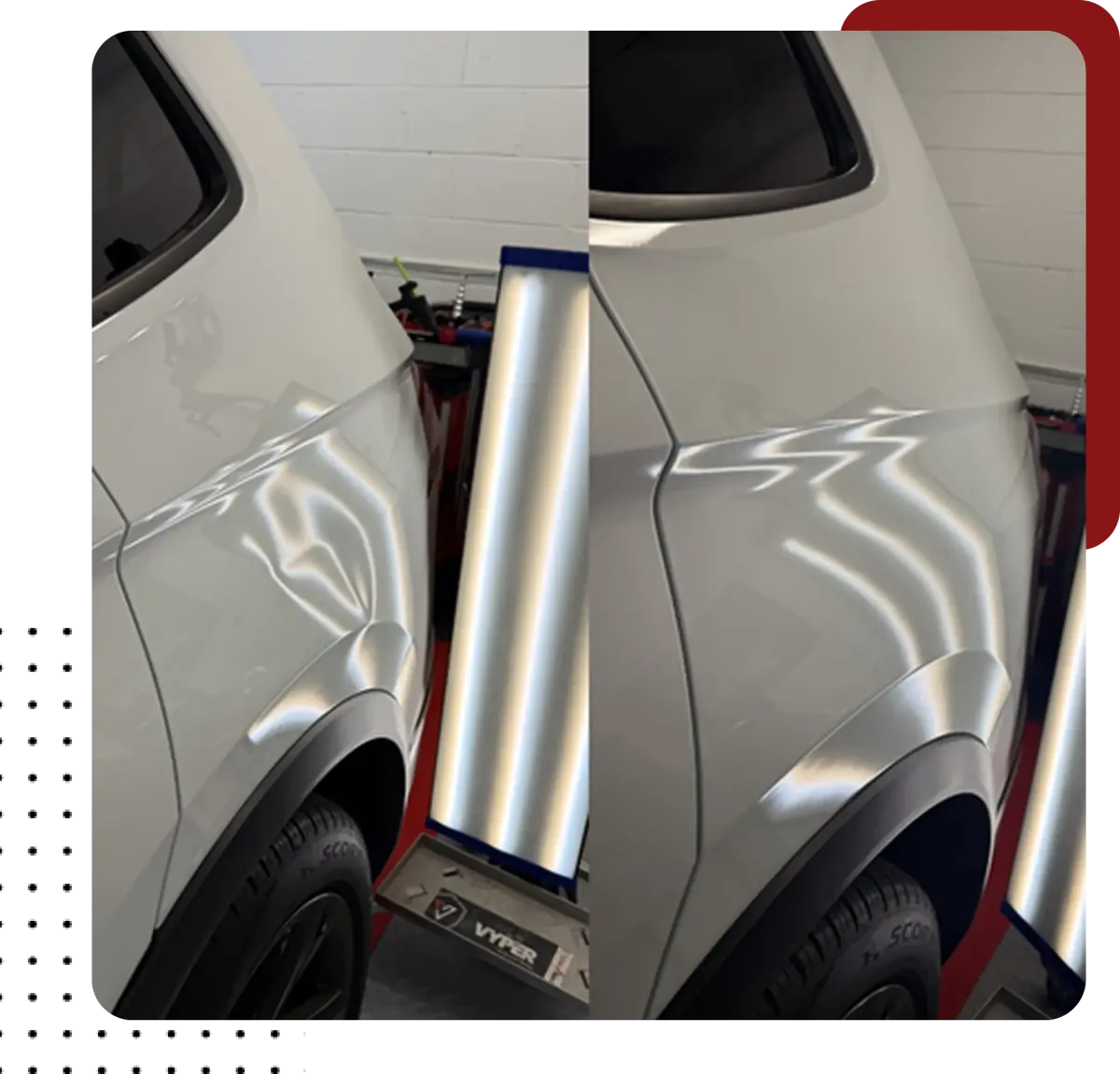
Not every dent is a PDR candidate. If a panel has cracked paint, missing clear coat, or a torn edge, paintwork may be required no matter what tools are used. Still, many shops start with PDR to reduce distortion, then finish with minimal paint. This is where push to paint pdr helps. It keeps the repair area small and can shorten the time your vehicle stays off the road when damage is beyond paintless methods.
When you compare pdr methods, ask how the tech will get access and how they will finish the surface. Good paintless dent repair methods include careful lighting, slow pushing, and blending until reflections match. For door dings, that last step is where cheap work shows. Ask for before-and-after photos and a clear quote. If the shop can explain its paintless dent repair techniques in plain terms, you’ll know what you’re paying for before work begins.
Choosing a Shop for Professional Dent Removal
Choosing the right shop starts with proof of results. Look for photos that show straight body lines, clean reflections, and no tool waves. Ask what pdr tools and techniques they use for your dent type, and whether they mix pushing and glue pulling. A solid tech will talk about access, risk to the paint, and realistic finish, not hype. That’s how you get best dent repair results.
Price should be clear, not a guess that changes later. A good process starts with photos, then an in-person check under a light. You should know if the dent can be fixed fully paintless, or if push to paint pdr is the plan. For hail clusters or several door dings, ask about package pricing and expected time. That helps you compare dent repair shops fairly for vehicles.
If you’re still asking what is pdr, start with a simple test: intact paint, a dent you can see but can’t feel as a sharp edge, and a panel that hasn’t been bent out of place. Those dents are prime for paintless dent repair techniques. If you want professional dent removal without long shop delays, East Coast Dents can review photos and recommend next steps today.
East Coast Dent Removal
Paintless Dent Repair & Large Dent Removal
Stay Up-to-date With Our Content
Subscribe to learn more about our mission!
Stay Up-to-date With Our Content
Subscribe to learn more!
Contact Info
Service Hours
Social Media
MON, TUE, THU, FRI: 9am-5pm
WED, SAT, SUN: Closed
Home
Services
Service Areas
Blog
About
Contact
Contact Info
Service Hours
MON, TUE, THU, FRI: 9am-5pm
WED, SAT, SUN: Closed
Social Media
Licensed & Insured
©2026 East Coast Dent Removal
Powered by: Customers.Plus